

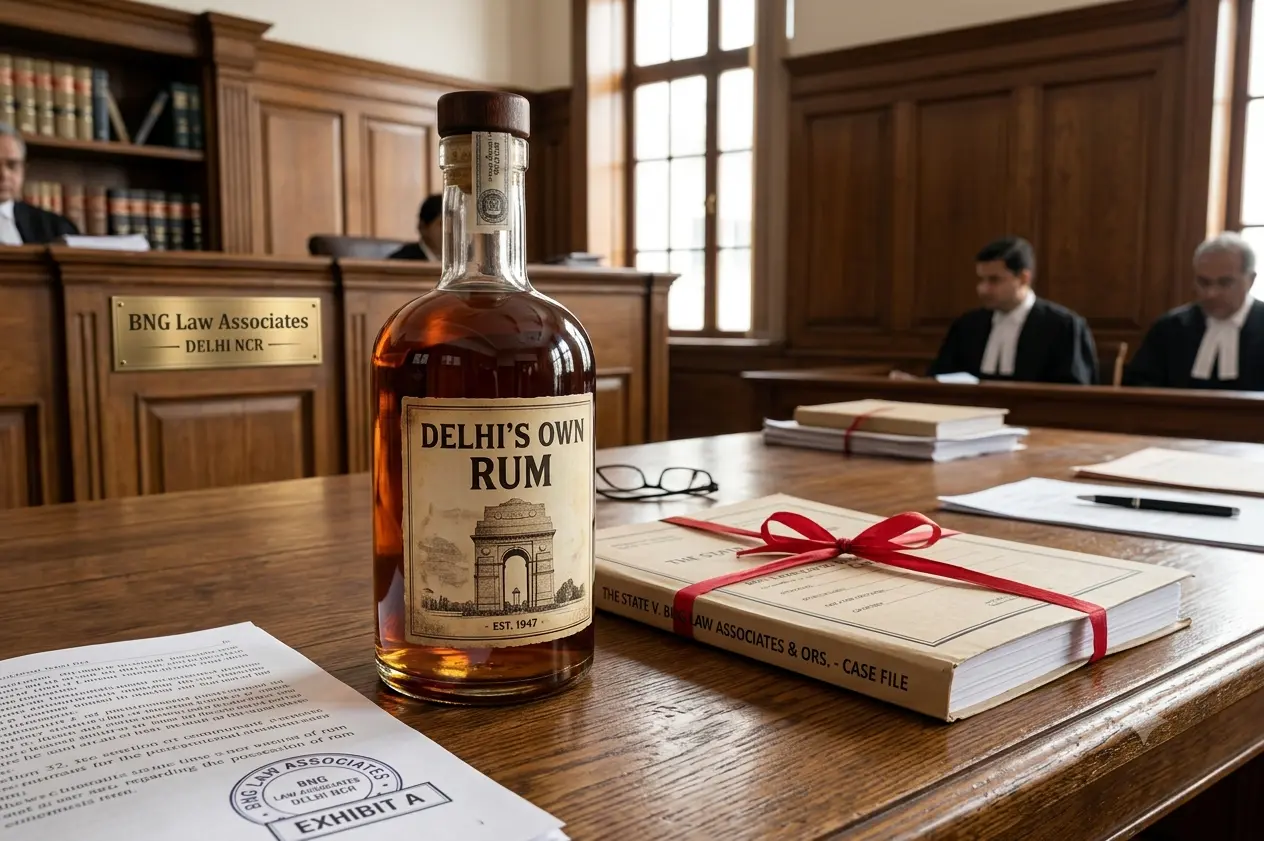
FSSAI Enforcement in India: Legal Remedies and Compliance Strategies for Food & Beverage Companies
An FSSAI notice rarely stays contained to a compliance file. It can freeze inventory overnight, delay a launch, strain a distributor relationship, or land on a board's agenda as a brand-reputation problem. Food and beverage companies operating in India are facing sharper scrutiny than ever over product composition, labelling, ingredient declarations, classification, and manufacturing practice — and the businesses that treat enforcement as a one-off administrative hiccup tend to be the ones caught flat-footed.
The alcoholic beverage sector is the clearest live example. In 2026, FSSAI moved against several products over added flavouring, product descriptions, and age-related claims. Some of the affected manufacturers pushed back in court. The proceedings involving United Spirits and Mohan Meakin before the Bombay High Court — still unresolved — have forced questions that used to feel theoretical into sharp focus: how far does FSSAI's regulatory power actually reach, what does the statute require procedurally, and what happens to an established product's labelling the moment a regulator disagrees with it.
The lesson isn't really about liquor. It's that FSSAI compliance has to be run as continuous risk management, not a licence you renew and forget.
This article walks through what a food or beverage business should actually be doing when FSSAI enforcement shows up — from the first notice through to the courtroom, if it gets that far.
What FSSAI Enforcement Actually Covers
FSSAI enforcement is the regulatory machinery under the Food Safety and Standards Act, 2006 that keeps food businesses aligned with safety, composition, quality, and labelling requirements. In practice, that machinery can look like an inspection, a sample pulled off a shelf, a lab test, an improvement notice, or — at the serious end — a full proceeding against the company.
The Act splits this authority across several roles: the Commissioner of Food Safety, Designated Officers, and Food Safety Officers each have distinct powers, and the statute separately addresses improvement notices, prohibition orders, emergency prohibition measures, sampling, and the laboratory framework that underpins most testing disputes.
Here's the point worth internalising early: the legal basis for an enforcement action is rarely a formality — it's often the actual battleground. Before engaging with the substance of an allegation, it's worth asking which officer issued it, under which section, and whether the process leading up to it followed what the statute actually requires.
Key Areas of FSSAI Enforcement
Labelling and the "true nature" requirement
Labelling disputes are among the more common areas of regulatory scrutiny. The Food Safety and Standards (Labelling and Display) Regulations, 2020 require packaged food to name the product in a way that reflects its true nature — the prescribed name where one exists, or an accurate descriptive name where it doesn't.
Simple enough, until a regulator decides the label doesn't match what's actually inside. At that point it stops being a packaging issue and becomes an operational one — existing stock, product approvals, marketing collateral, and sometimes approvals under entirely separate laws all get pulled into the dispute simultaneously.
Additives, flavouring, and where "standardised" products get complicated
Additives and flavouring sit in a genuinely grey zone. FSSAI's general regulations permit certain additives and processing aids, and for alcohol specifically, the Food Safety and Standards (Alcoholic Beverages) Regulations, 2018 set out what's allowed.
The friction starts when a regulator takes the view that an added flavour changes — or disguises — the essential character of a product with a defined standard. That's precisely the fault line in the 2026 disputes: FSSAI's position is that flavours designed to mimic a standardised beverage's characteristics raise composition and labelling concerns; manufacturers argue their products and labels comply with the existing framework, and that these practices have been industry-standard for years.
That second argument is worth pausing on, because it's a trap companies fall into often. "We've always done it this way" isn't a legal defence on its own. It's relevant context at best — it doesn't substitute for testing a formulation against the current regulatory text. At the same time, when FSSAI is the one advancing a new or contested reading of an existing rule, that interpretation — and the process used to enforce it — becomes fair game for legal challenge.
Age and blending claims for spirits
The Alcoholic Beverages Regulations get specific about maturity claims. A "matured" claim triggers a minimum maturation period; an "aged" claim has to refer to the youngest spirit in the blend, not an average or a flagship component.
For any manufacturer doing blending, this makes production records genuinely load-bearing — not paperwork filed and forgotten. Batch composition, constituent spirit ages, blending logs, and the documentary basis for whatever the label actually says all need to hold up together, because an age-declaration dispute is rarely just a legal argument — it's one that lives or dies on whether the technical paper trail backs it up.
FSSAI Show Cause Notice: Key Issues to Examine
A show-cause notice is often where a regulatory dispute begins, and it gets less scrutiny than it deserves — companies often treat it as a formality to answer quickly rather than a document that shapes everything downstream.
Before drafting a response, look closely at whether the notice is properly grounded: does it cite the specific provision or standard allegedly violated, or does it gesture vaguely at "non-compliance"? A poorly particularised notice can itself become a procedural argument later. Check whether the response window is realistic given the technical complexity involved — an unreasonably short deadline can support a natural-justice objection down the line. Identify what the notice is actually based on — a sample result, an inspection finding, a document review — since that determines what evidence the reply needs to marshal. And decide early whether the response should stay purely factual and technical, or also preserve legal arguments about jurisdiction, procedure, or the validity of the allegation itself for later stages.
A rushed, purely defensive reply here can limit a company's options if the matter escalates. Courts often look back at the original show-cause response, so it's worth treating it with the seriousness of a first legal filing — because that's effectively what it is.
FSSAI Laboratory Reports and Referral Testing
Lab results carry disproportionate weight in FSSAI matters. They're often treated as close to conclusive, even though the sampling and testing process behind them is frequently contestable.
A company facing an adverse report should examine how the sample was drawn and sealed, whether the prescribed procedure was actually followed, which laboratory conducted the analysis and whether it was properly recognised for that category of test, and what method was applied against the relevant standard. The FSS Act's referral laboratory mechanism exists precisely because first-line results aren't meant to be automatically final — where a result is genuinely disputed, referral testing can be the difference between a manageable finding and a prohibition order.
This isn't a challenge that can be outsourced to lawyers alone. It needs someone who understands the testing methodology well enough to spot where it may have gone wrong, paired with someone who knows which of those gaps actually carry legal weight. Treating a disputed lab report as pure paperwork is one of the more expensive mistakes companies make at this stage.
What to Do After Receiving an FSSAI Notice
How a company reacts in the first days after a notice arrives tends to shape everything that follows. Legal, regulatory affairs, quality control, and technical teams need to be in the same room early — not looped in after legal has already drafted a response.
Lock down the records before anything gets reorganised or lost. Formulation documents, batch records, certificates of analysis, lab reports, supplier documentation, label approvals, and prior regulatory correspondence all become evidentiary if this escalates. Treat them that way from day one, not after a lawyer asks for them.
Don't split legal and technical advice into separate tracks. A lawyer without grounding in flavouring chemistry or blending records will miss the substance. A technical team without legal grounding will miss the questions about jurisdiction and procedure that often decide the case. Beyond a straightforward labelling fix, these two threads need to be worked jointly, not handed off sequentially.
FSSAI Prohibition Orders: What They Actually Restrict
Prohibition and restrictive orders under the FSS Act aren't all cut from the same cloth, and that distinction determines what remedy is even available. Sections 33 and 34 cover prohibition orders and emergency prohibition measures respectively — but the specific provision invoked, the authority that issued it, and the factual record behind it will shape everything that follows.
Before treating an order as either unassailable or automatically challengeable, get clarity on who issued it and under what provision, what factual findings it rests on, whether the company had a genuine opportunity to respond before it was passed, and how broad the restriction actually is in practice — a narrow, product-specific restriction is a very different fight from a blanket manufacturing ban.
Natural Justice and Procedural Fairness
Regulators carry a real public-safety mandate, and courts are generally reluctant to second-guess a specialised body's technical judgment. But that mandate doesn't place enforcement action outside the reach of administrative law. Questions of adequate notice, a genuine opportunity to be heard, whether technical evidence was actually considered, and whether the authority stayed within its statutory powers remain live even in a food-safety context.
The question isn't whether every enforcement action needs identical procedure — it doesn't. It's whether this action, given this statute and these facts, followed a process the law would recognise as fair. That's a narrower, more fact-specific inquiry than a blanket claim of "unfair treatment," and it's usually the stronger ground to argue from.
Legal Remedies Against FSSAI Enforcement
Which remedy fits depends heavily on where a company is in the process — and choosing the wrong one, or the wrong sequence, can cost real time.
At the earliest stage, a representation to the regulator is often the fastest route, particularly where the dispute is genuinely about interpretation rather than a factual disagreement. It doesn't foreclose other options and can occasionally resolve a matter without escalation at all. Where the FSS Act provides a statutory appeal or review mechanism for the type of order in question, that route generally needs to be exhausted — or at least seriously engaged with — before a court will entertain a writ petition; courts are typically reluctant to bypass a remedy Parliament has already built in. Where no adequate statutory remedy exists, or the order raises questions of jurisdiction, procedural fairness, or the authority's power to act at all, a writ petition under Article 226 before the relevant High Court becomes the live option — the route United Spirits and Mohan Meakin have both taken. Separately, if lawful enforcement has tipped into something disproportionate or applied in bad faith, that's a distinct argument from a straightforward challenge to the underlying finding.
The mistake to avoid is defaulting straight to litigation because it feels like the strongest move. Courts often ask why a statutory remedy wasn't tried first, and a rushed writ petition without that groundwork can end up weaker than a well-prepared representation or appeal would have been.
The United Spirits Dispute: Why It Matters Beyond Alcohol
The United Spirits matter is a useful case study precisely because it shows how fast a labelling or formulation question can turn into a full commercial crisis. The company challenged an FSSAI order concerning a product from its Baramati facility, and the matter is now before the Bombay High Court alongside the parallel Mohan Meakin proceedings. Both cases raise questions about the statutory basis for restricting fresh production and how existing inventory should be handled — through relabelling or otherwise.
As of August 2026, the Bombay High Court has sought a response from the Centre and FSSAI, and the matter remains listed for further hearing. Nothing here is resolved, and none of it should be read as a final answer on the underlying regulatory questions.
Why this matters outside the liquor sector: any business with an established product, a national distribution footprint, and consumer-facing claims is one regulatory reinterpretation away from the same position — inventory in limbo, labels that need to change overnight, and a court fight layered on top of an operational one. Waiting for that moment to start paying attention is the expensive way to learn this.
Building a Compliance Strategy That Actually Holds Up
Audit labelling and product claims on a schedule, not a whim. Front-of-pack declarations, ingredient lists, nutritional panels, naming, and marketing claims should be checked against the current regulatory text — not the version in force when the product first launched. Regulations get amended more often than product teams tend to track.
Keep the technical file current, not just the legal file. For anything involving blending, additives, or complex formulation, the documentation proving why the formulation and label comply should exist before a regulator ever asks for it — technical opinions, formulation records, lab data, supplier certifications.
Build a response protocol before you need one. Know in advance who owns the response when a notice, inspection, adverse lab result, or restriction order lands — legal, regulatory, quality, and leadership all need defined roles before the clock starts running, not while it's already running.
When to Bring in a Regulatory Lawyer
Some situations are genuinely fine to handle internally with a light legal touch — a documentation gap, a minor labelling correction. Others aren't. Get specialist advice early when a notice alleges serious non-compliance, a lab result is genuinely disputed, a product faces prohibition or restriction, an established product's classification is suddenly in question, significant inventory is affected, a recall is on the table, or the company is weighing High Court proceedings.
The value of early input isn't just legal cover — it's knowing the difference between something you fix administratively in a week and something that needs a formal, litigation-ready response from day one.
Frequently Asked Questions
Can FSSAI prohibit the sale of a food product?
Yes, under specific statutory provisions — but the legal basis and procedure vary by case. The provision relied on and the issuing authority both need examining before assuming an order is valid or final.
What should we do after getting an FSSAI show-cause notice?
Identify the exact allegation and legal provision behind it, preserve every relevant technical record, review any lab findings closely, and get regulatory and legal input before drafting a response — not after.
Can an FSSAI order be challenged in the High Court?
Judicial review under Article 226 can be available depending on the facts, but whether it's the right route — or even maintainable — depends on jurisdiction, procedural history, and whether statutory remedies exist and have already been used.
Can a disputed FSSAI lab report be challenged?
Yes, through mechanisms built into the food-safety framework itself, including referral testing — but this needs to move quickly, with both technical and legal review of the sampling and testing process.
Does long industry practice protect against enforcement?
Not by itself. It can be relevant context in a dispute, but it doesn't establish compliance with the regulatory framework as it currently stands.
What is an FSSAI prohibition order?
A prohibition order is a formal direction under Sections 33 or 34 of the FSS Act restricting or halting the manufacture, sale, or distribution of a food product, usually issued where a regulator finds a safety, composition, or labelling violation. The scope can range from a narrow, product-specific restriction to a broader manufacturing ban, depending on the provision invoked and the findings behind it.
The Bottom Line
FSSAI compliance shouldn't start the day a notice arrives. Formulation, labelling, manufacturing records, and testing procedures need periodic review well before enforcement becomes a possibility.
When enforcement does happen, the response has to go beyond the specific allegation — into the statutory authority behind it, the technical evidence, whether the process was fair, and which remedy actually fits. The alcoholic beverage disputes now working through the Bombay High Court show exactly how fast a flavouring or labelling question can become a full-scale commercial fight. For any regulated food or beverage business, the lesson isn't about liquor — it's about how much a delayed, uncoordinated response can cost once a regulator moves.
This article is for general informational purposes and does not constitute legal advice. Application of the FSS Act, its regulations, and the cases discussed will depend on the specific facts of each matter. Businesses facing active enforcement should seek case-specific legal advice.
.jpeg)

Comments (0)
Abhi tak koi comment nahi hai. Sabse pehle comment karein!
Apna Comment aur Rating dein